


Program to accelerate professional figures in the circular economy for food
Circular Recipe by circular gastronome Alessia Dinatale
Summary
- Difficulty: Easy
- Preparation: 60 min
- Serves for: 4 people
- Cost: Low
Ingredients
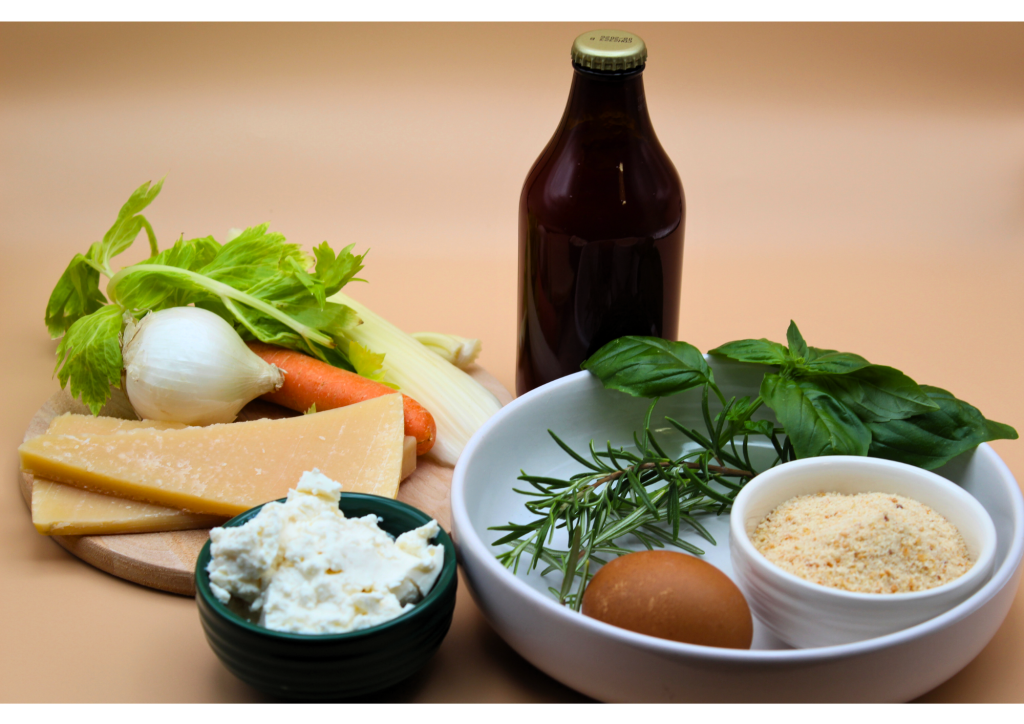
For the bread dumplings
- 300 g of stale bread
- 200 g of cottage cheese
- 1 egg
- 40 g of flour
- Salt and pepper to taste.
For the Parmesan crust ragout.
- 150 g of well-cleaned Parmesan cheese crusts
- 1 small onion
- 1 celery rib
- 1 carrot
- Flavors and flavors
- 300 g of tomato puree
- Extra virgin olive oil q.b.
- Grated parmesan cheese to taste.
Proceedings
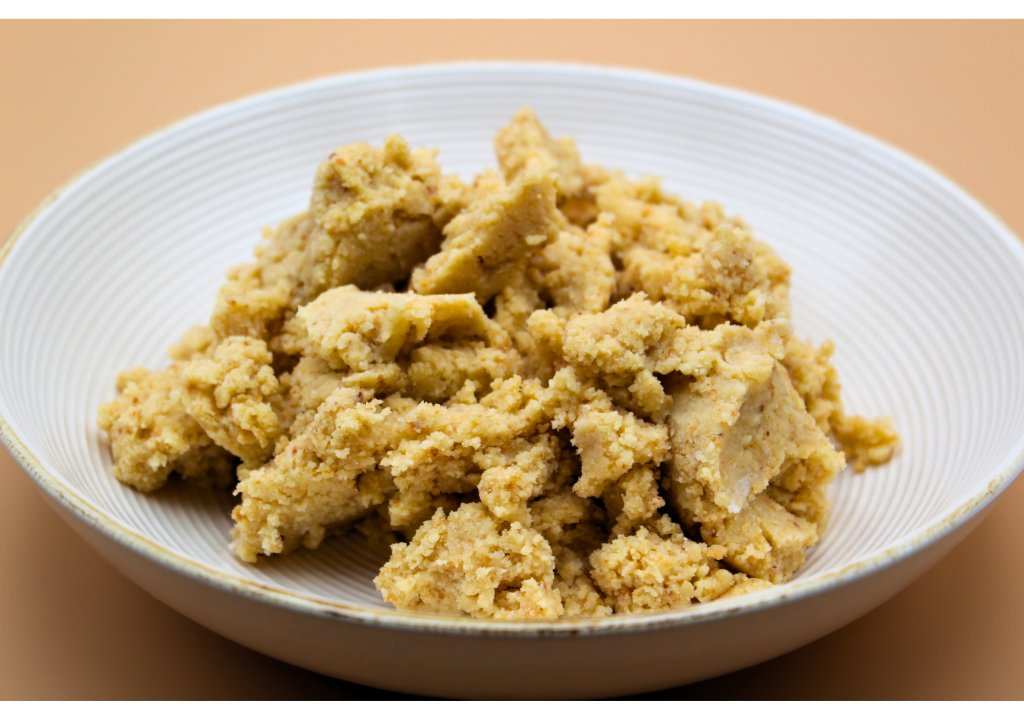
- Cut stale bread into cubes and place in a large bowl. Let soak in water for a few minutes until the bread becomes soft. Squeeze lightly and add the egg, flour, cottage cheese, salt and pepper. Mix until the dough is firm but soft.
- With lightly floured hands, form small dumplings and place them on a floured tray. Allow to rest for a few minutes.
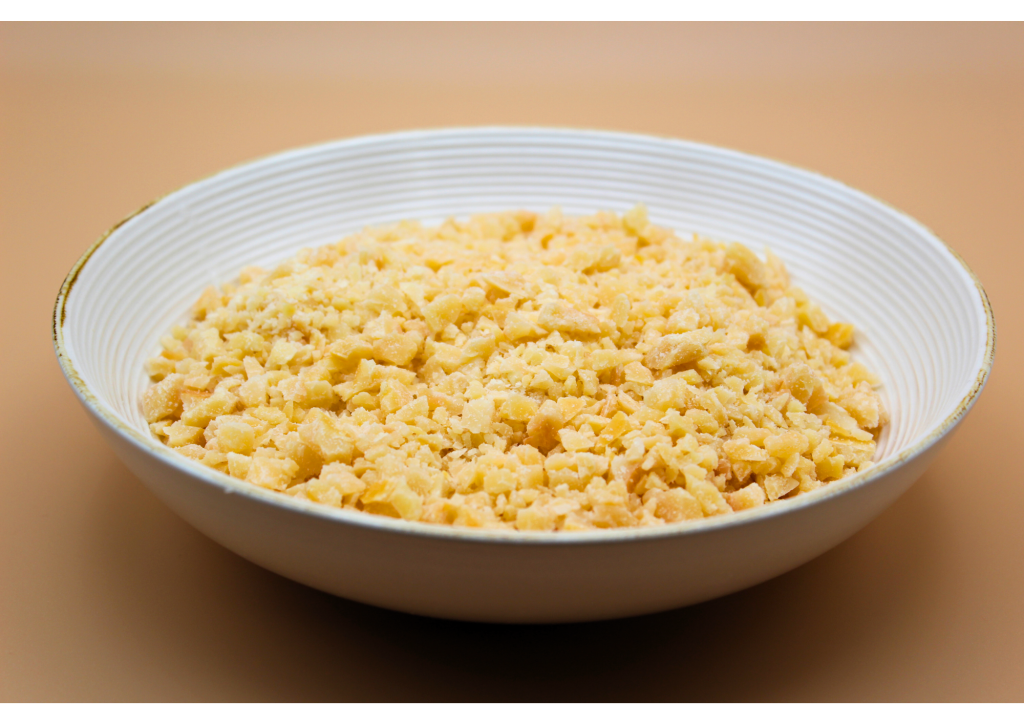
- Meanwhile, prepare the meat sauce. Thoroughly clean the Parmesan cheese crusts by scraping off any external residue and either cut them into small cubes or chop them in a blender.
- In a saucepan, heat a drizzle of extra virgin olive oil and sauté finely chopped onion, celery and carrot. Add the Parmesan crusts and let them season for a few minutes. Add the tomato puree and cook over a gentle heat for about 30 minutes, until a thick and aromatic ragout is obtained. While cooking, the crusts will soften, releasing their intense flavor.
- Bring a pot of salted water to a boil and cook the gnocchi. When they rise to the surface, drain them gently.
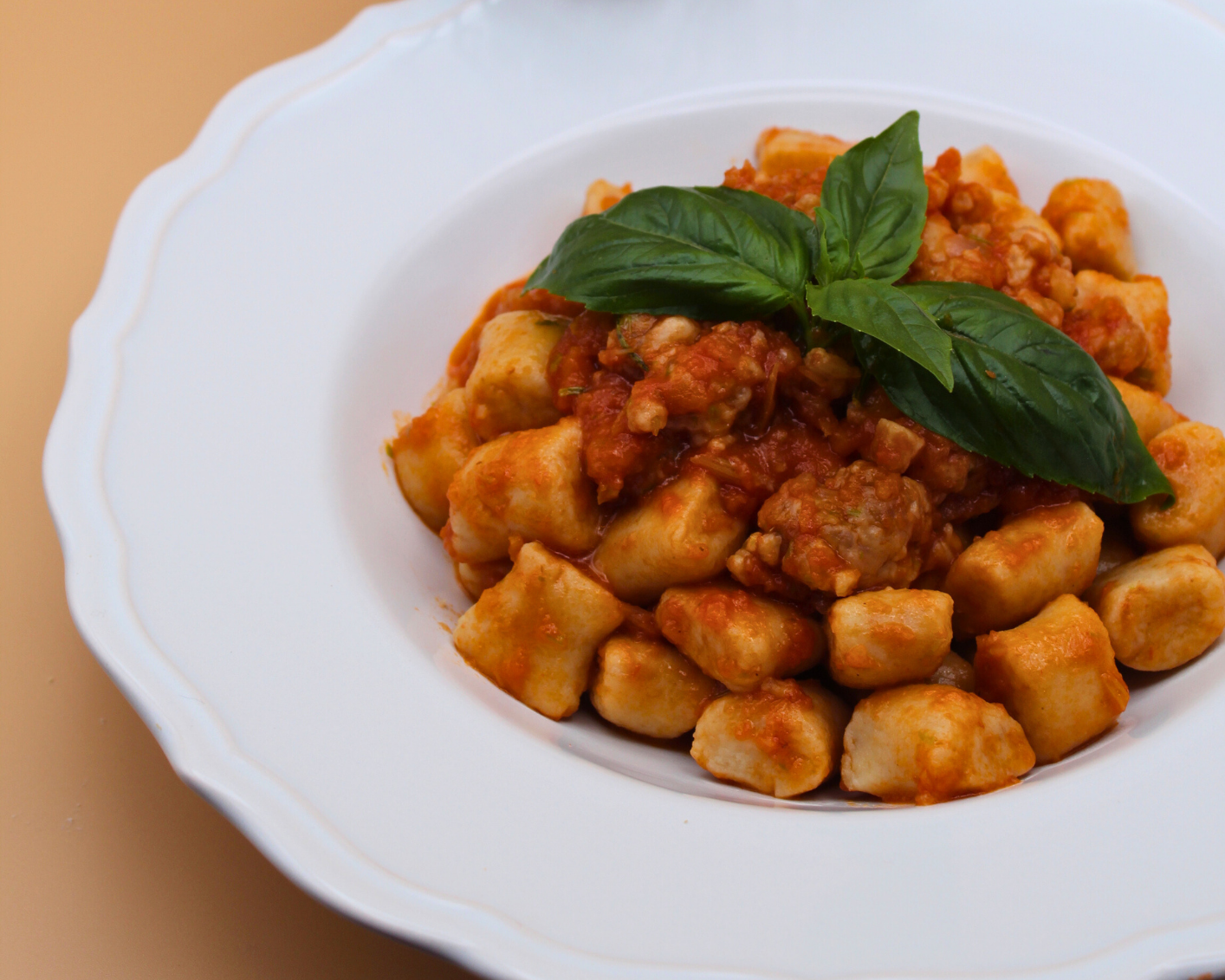
- Serve the gnocchi with the Parmesan crust ragout and top with a sprinkling of grated Parmesan cheese.
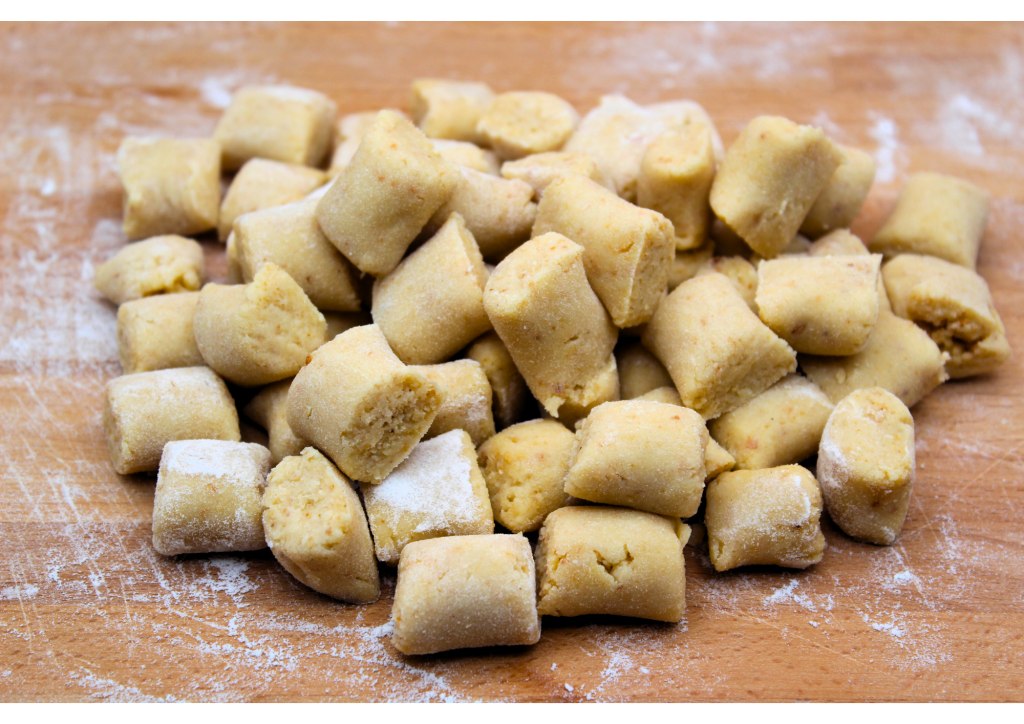
Circular kitchen and long cycle
Bread gnocchi with Parmesan cheese crust ragout is an emblematic example of a long cycle in circular cooking. Both stale bread and cheese crusts are ingredients that retain food potential even after their main consumption stage.
Bread, regenerated through soaking and transformation into dough, becomes the base for gnocchi; similarly, Parmesan cheese crusts, often considered waste, are rehydrated and slow-cooked until they are transformed into a rich and flavorful condiment. This process demonstrates how some foods can go through multiple cycles of use without losing value, but rather acquiring new gastronomic functions.
The recipe puts into practice a logic of domestic regeneration, in which end-of-life ingredients are reintegrated into the kitchen system through simple and accessible techniques. The result is a dish that combines peasant memory, creativity and sustainability, showing how cooking can extend the life cycle of food and turn what remains into a new culinary opportunity.
Photos by Alessia Dinatale


