Program to accelerate professional figures in the circular economy for food
Circular Recipe by circular gastronome Alessia Dinatale
Summary
- Difficulty: Medium
- Prep time: 1 hour (including pasteurization)
- Makes: 4 jars of 300g each
- Cost: Low
Ingredients
For the host
- 2 zucchini
- 2 stalks of celery
- 2 cucumbers
- 2 white onions
- 1 carrot
- 1 red bell pepper
- 1 yellow bell pepper
- 150 g of peas
- 80 g of sun-dried tomatoes
- 80 g of green olives
- 30 g of desalted capers
For the brine
- 500 ml of water
- 500 ml of white wine vinegar
- 60 g of sugar
To serve
- 240 g whole-wheat couscous
- 200 g of tuna trimmings
- Extra virgin olive oil, to taste


Proceedings
- Wash all the vegetables thoroughly and cut them into even pieces.
- Prepare the brine by bringing the water, vinegar, and sugar to a boil.
- Blanch the zucchini, bell peppers, onions, and peas separately in brine, taking care to preserve their texture and color.
- Chop the cucumbers, sun-dried tomatoes, olives, and capers, then add them to the vegetables while they’re still warm.
- Pour the mixture, while it is still hot, into thoroughly clean and sterilized glass jars, leaving about 1 cm of space at the top.
- Completely cover the vegetables with the boiling brine, removing any air bubbles with a clean spatula, and immediately seal the jars with new lids.
- Place the jars in a pot lined with a dish towel, cover them completely with water, and bring to a boil.
- Pasteurize for about 30 minutes starting from when the water comes to a boil, then let the jars cool completely while still submerged in the water. Once they are cool, check the lids to make sure a vacuum seal has formed.
- Store in a cool, dry place away from light. Wait at least 2 weeks before consuming, to allow the preserve to settle and the flavors to blend.
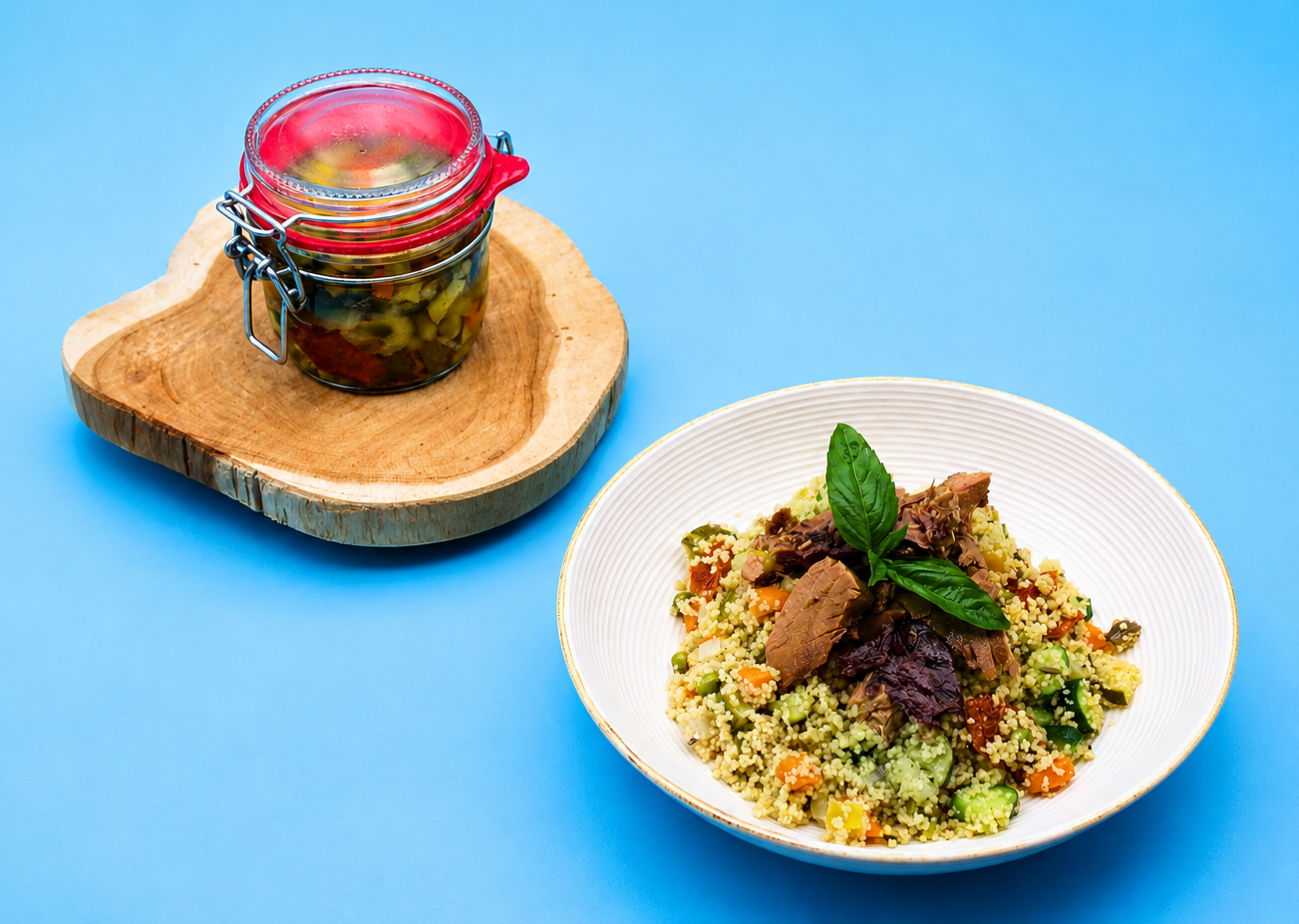
- Just before serving, prepare the whole-wheat couscous according to the package directions and top the dish with the conditutto and the tuna buzzonaglia, finishing with a drizzle of extra-virgin olive oil.
Quick Tip on Preservation
To safely prepare homemade preserves, it is essential to use unbroken jars and lids, work with fresh ingredients, and follow the correct proportions of water and vinegar specified in the recipe. After pasteurization, always check that a vacuum seal has formed properly: the lid should not flex when pressed in the center. If the jar shows signs of bulging, leaks, unusual odors, or mold, do not consume its contents. These guidelines are in accordance with the recommendations of the Ministry of Health, the National Reference Center for Botulism (ISS), and the manual *Guidelines for the Proper Preparation of Homemade Preserves*.
Circular Cuisine and Preservation
Summer vegetable pickles are a concrete example of how preservation can become a fundamental tool in circular cuisine. During the summer season, vegetables are at their peak in terms of availability and quality, but they are also at their most perishable. By preserving them in a sweet-and-sour brine and then pasteurizing them, it is possible to significantly extend their shelf life, transforming a seasonal surplus into a resource available year-round.
Preserving food isn’t just about avoiding waste—it’s also about organizing your pantry more efficiently. Preparing preserves during the months when produce is plentiful helps reduce food waste, cut down on purchases of store-bought preserves, and ensures you always have a ready-to-use base for putting together complete meals in just a few minutes.
The recipe also highlights a second, already established method of preservation : sun-dried tomatoes, obtained through the drying process, are incorporated into the dish along with olives and capers, creating a layering of preservation techniques typical of the Mediterranean tradition. The tuna “buzzonaglia” also contributes to the dish’s circular logic, demonstrating how it is possible to make the most of cuts that are less in demand but rich in nutritional value.
The result is a dish that combines culinary tradition, household organization, and sustainability, demonstrating how food preservation is one of the most effective strategies for reducing food waste and making everyday cooking more resilient.
Photos by Alessia Dinatale