


Program to accelerate professional figures in the circular economy for food
Circular Recipe by circular gastronome Alessia Dinatale
Summary
- Difficulty: Easy
- Prep time: 25 min
- Serves for: 4 people
- Cost: Low
Ingredients
- 240 g whole-wheat pasta
- 400 g cow’s milk ricotta
- 200 g cooked chickpeas
- 250 g ripe tomatoes
- 30 g blanched almonds
- 1 bunch of basil
- 1 teaspoon of tomato paste
- 1 tablespoon of grated Parmesan cheese
- Extra virgin olive oil, to taste
- Salt and pepper to taste.
For decoration
- Sliced almonds
- Fresh basil
- Extra virgin olive oil

Proceedings
- Cook the whole-wheat pasta in a large pot of lightly salted water until al dente. Drain and let cool, adding a little olive oil.
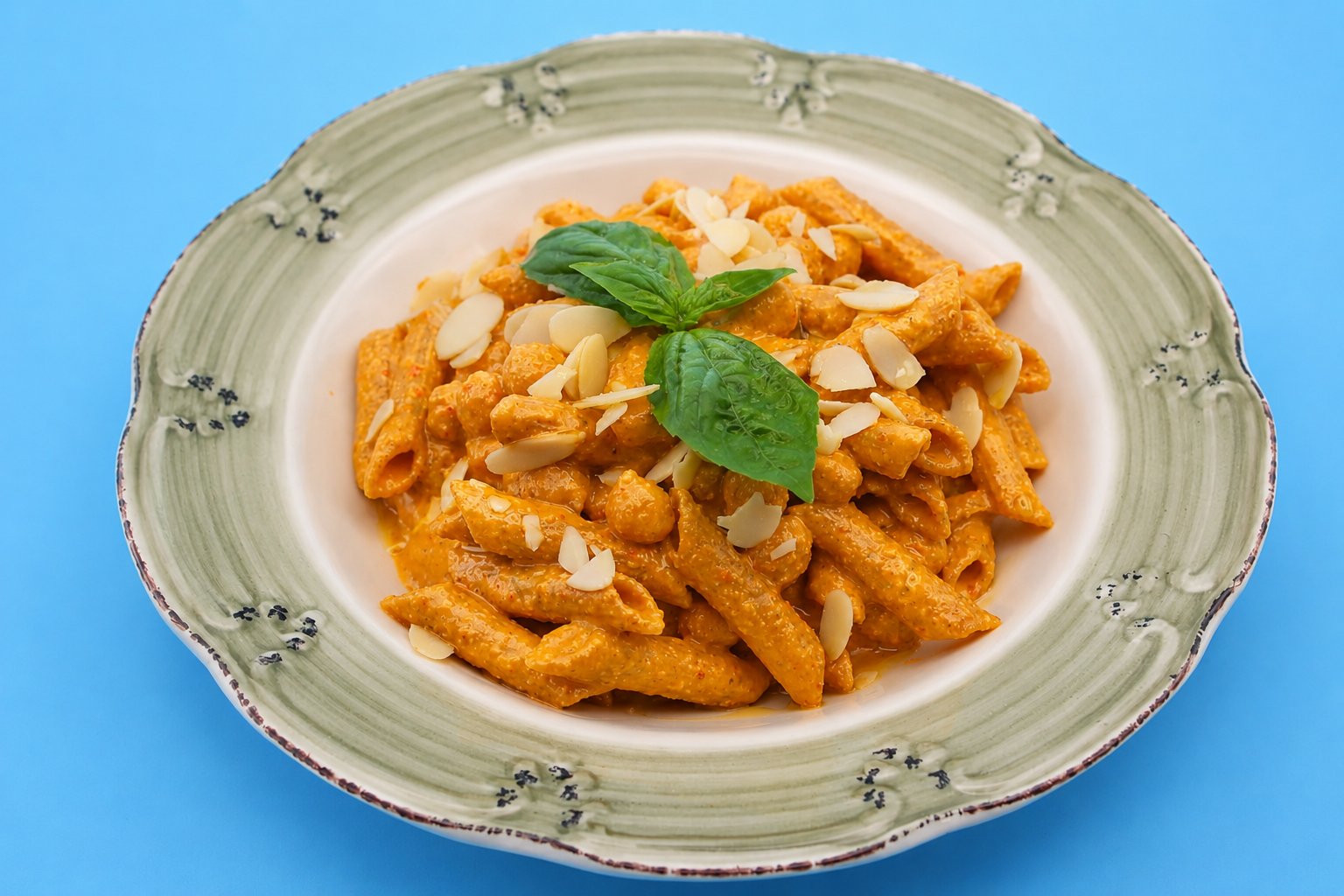
- To make the pesto, place the chopped tomatoes, ricotta, some of the cooked chickpeas, almonds, basil, tomato paste, Parmesan cheese, and a drizzle of extra-virgin olive oil into the bowl of a food processor. Blend until smooth and creamy. If necessary, add a little of the cooking water from the chickpeas or pasta to adjust the consistency.
- Transfer the cooled pasta to a large bowl, add the pesto and the whole chickpeas, and stir gently until the sauce is evenly distributed.
- Garnish with sliced almonds , fresh basil leaves, and a drizzle of extra-virgin olive oil.

Circular cuisine and nutritional sustainability
This cold pesto prepared in the Trapani style is a prime example of nutritional sustainability, one of the fundamental principles of the Circular Economy for Food.
This recipe applies the concept of protein complementation, combining grains and legumes to achieve a complete amino acid profile. Whole-wheat pasta provides complex carbohydrates, fiber, and sulfur-containing amino acids, while chickpeas supply plant-based protein rich in lysine: together, they create a nutritional balance that makes the dish complete and satisfying.
This synergy is complemented by the unsaturated fats found in almonds and extra-virgin olive oil, as well as the vitamins, minerals, and antioxidants naturally present in tomatoes and basil. The result is a dish that not only meets energy needs but also contributes toa more balanced and sustainable diet.
Nutritional sustainability is also reflected in the choice of simple, seasonal ingredients that are readily available in the Mediterranean region, which ensure high nutritional quality while minimizing environmental impact.
In addition, making pesto without heating it helps reduce household energy consumption and better preserves the flavors and nutrients of the ingredients. This recipe thus demonstrates how culinary tradition, well-being, and sustainability can coexist harmoniously in a single dish.
Photos by Alessia Dinatale


