Fact sheet written by Michele Burrascano, Marta Tambone, Francesco Maurizio Volpe of the Science of Gastronomic Design course of the UNISG Bachelor of Science in Gastronomic Sciences and Cultures degree program
Country: Denmark
Address: Ryesgade 65, Copenhagen, 2100, Denmark
Type of reality: Restaurant
Target audience: B2C
Claim: Natural Imperfection
Web site: www.terrarestaurant.dk
Scenario
In the high-end restaurant industry, food waste is a real and too often underestimated challenge. According to the FAO, about 12 percent of global food waste comes from restaurants, hotels, and canteens (FAO, 2023). On average, a traditional restaurant produces up to 1.5 kg of food waste per cover per day, a figure that, multiplied by the number of customers served each year, generates significant environmental, economic and social impacts (Winnow, 2023).
This type of waste, in a global context marked byfood insecurity andinflation on food commodities, is an ethical contradiction and a limitation to the transition to sustainable models. A significant portion of restaurant waste results from inefficient management of raw materials, excessive portions, lack of planning in the menu, and improper storage of products.
These factors are compounded by the pressure to offer a wide variety of fresh dishes every day, which often leads to the elimination of ingredients not used in time. This phenomenon also has a significant social impact, as it coexists with the problem of food insecurity in many urban areas (Ellen MacArthur Foundation, 2023). In an era marked by environmental crisis and rising raw material costs, rethinking the traditional restaurant model becomes an urgent priority.
Description
Tèrra is a restaurant born in the heart of Copenhagen, founded by an Italian couple who chose to bring a new idea of ethical and sustainable cuisine to the Nordic gastronomic scene. From the beginning, the goal of the project was to propose fine dining cuisine capable of combining zero waste, craftsmanship and respect for the environment (Tèrra).
Italian chef Valerio Serino, Tèrra‘s sustainable development manager, works every day to innovate and rethink the use of ingredients. The restaurant does not call itself Italian, but offers international cuisine that expresses the values of zero waste, sustainability, innovation and minimalism (Visit Copenhagen, 2025).
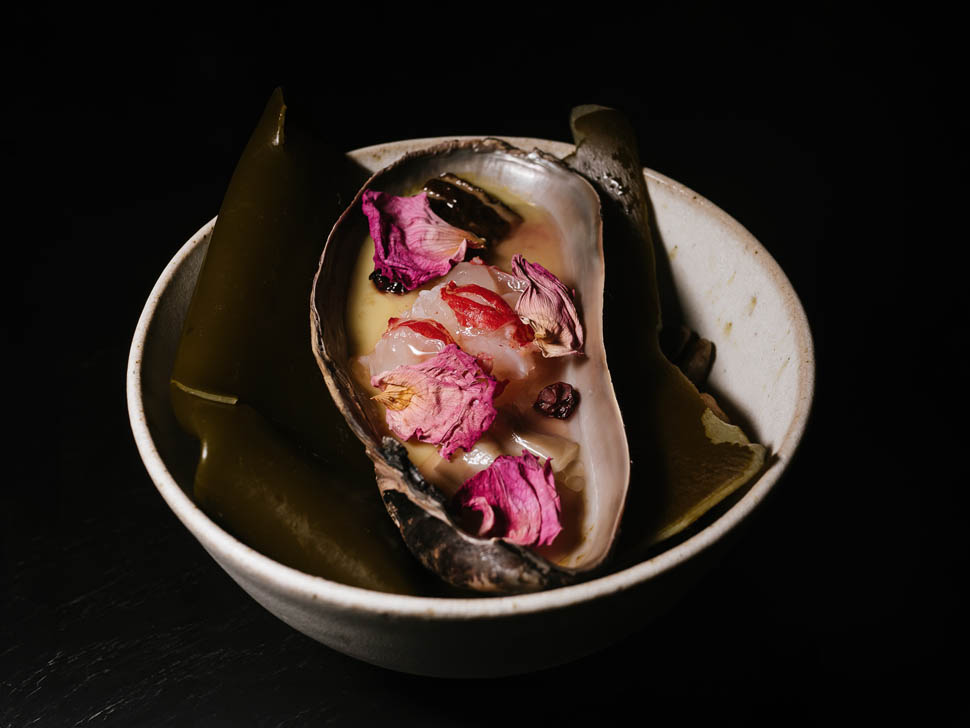
The restaurant bases its work on a strong commitment to thecircular economy. Each ingredient is chosen according to seasonality,local origin, and environmental impact. No waste is wasted: peels, leaves, stems, and other usually excluded parts are transformed into new preparations such as fermented foods, broths, sauerkraut, or aromatic powders (Angelucci, 2022).
Tèrra’s approach goes beyond the kitchen: even theenergy used is renewable, suppliers are selected for their ethical practices, and the entire staff is involved in participatory decision-making. The restaurant practices a model that promotes social cohesion, trust, and shared responsibility (Tecchiati, 2024).
The circular economy applied to food goes far beyond reusing waste; it involves taking a systemic, nonlinear approach (Fassio, 2023). Therefore, it is crucial to establish interconnected networks not only between production processes but also between operators.
Tèrra has fully grasped this aspect, in fact it also contributes to public education and awareness through events and collaborations with local agricultural realities. The intent is to build a dialogue between producers, chefs and customers, in a win-win logic that harmoniously balances the environment and the human being (Identità Golose, 2021).
Today, Tèrra is recognized as one of the most coherent and innovative models of circular catering in Europe, capable of combining gastronomic quality and environmental responsibility so much so that it has earned the recognition of a Michelin Green Star.
Bibliography
- Angelucci, G. (2022, June 4). Tèrra, the zero waste restaurant of two talented Roman chefs in Copenhagen. https://reportergourmet.com/it/news/840-terra-il-ristorante-zero-waste-di-due-talentuosi-chef-romani-a-copenaghen
- Ellen MacArthur Foundation. (2023). Bridging the adaptation gap: can the circular economy help?. https://www.ellenmacarthurfoundation.org/articles/bridging-the-adaptation-gap-can-the-circular-economy-help
- FAO. (2023). Technical Platform on the Measurement and Reduction of Food Loss and Waste (TPFLW). https://www.fao.org/platform-food-loss-waste/en
- Fassio, F. (2023, 05 22). Circular Economy for Food: the circular economy for food as a tool for change. https://www.slowfood.it/circular-economy-for-food-leconomia-circolare-per-il-cibo-come-strumento-per-il-cambiamento/
- Identità Golose. (2021, 09 19). Tèrra in Copenhagen: sustainability and Italianness joined at the hip. https://www.identitagolose.it/sito/it/95/28929/dal-mondo/terra-a-copenhagen-sostenibilita-e-italianita-unite-a-doppio-filo.html
- Tecchiati, B. (2024, 04 22). Terra, The Green Star Earned By Two Italians In Copenhagen: When Sustainability Becomes Reality. https://reportergourmet.com/en/news/6806-terra-the-green-star-earned-by-two-italians-in-copenhagen-when-sustainability-becomes-reality
- Tèrra. (s.d.). https://www.terrarestaurant.dk/
- Visit Copenhagen. (2025). Land. https://www.visitcopenhagen.com/copenhagen/planning/terra-gdk1125147
- Winnow. (2023). Food Waste in Hospitality Report. https://www.winnowsolutions.com