Fact sheet written by Tallulah Richards and Serena Tomio from the Gastronomic Design Sciences course of the UNISG Bachelor of Science in Gastronomic Sciences and Cultures degree
Type: Documentary
Director: Kavita Carneiro
Main actor: Peasant women from the Maharashtra region of India
Distribution year: 2025
Language: Marathi + subtitles in English and 13 Indian languages
In their struggle for access to land and natural resources, rural women in Maharashtra, India, have for decades challenged deep-seated discrimination related to the caste system and gender biases that have historically excluded them from land rights.
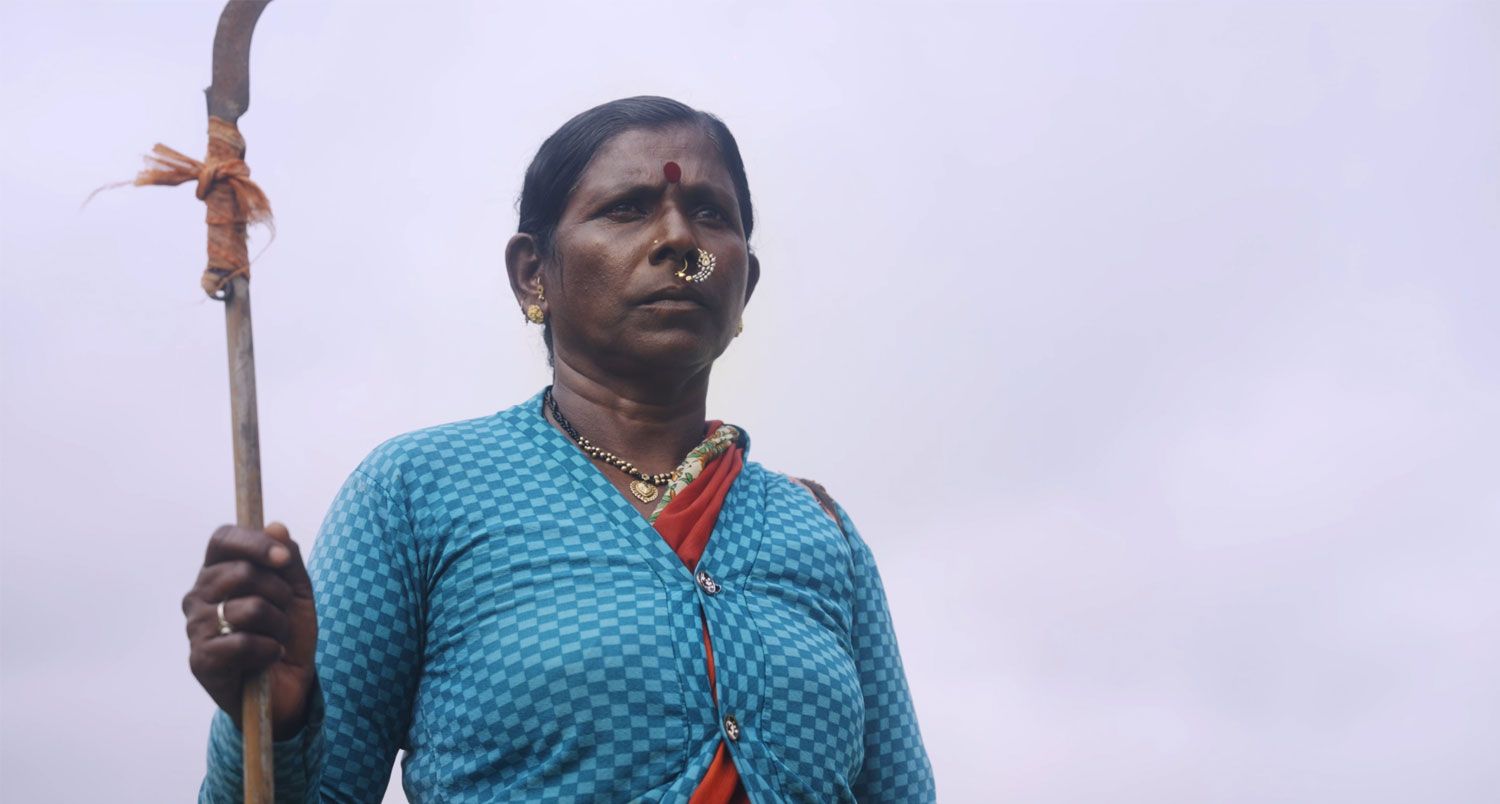
This short documentary tells the stories of several women farmers in the Beed region who are the protagonists of a movement started on International Women’s Day with the aim of giving visibility to farming communities and their practices of resistance and regeneration.
Opening the narrative is Dwarka Waghmare, a Dalit farmer from one of the most marginalized castes in rural India. Through her childhood memories, Dwarka describes the historic competition for access to fertile land between the Dalits and the socially dominant Mahar caste. While the Mahar were allotted the valley lands, rich in water even during the monsoons, the Dalits cultivated hilly, dry, hard-to-irrigate land.
The documentary highlights how climate change, with increasingly erratic rainfall, has exacerbated these inequalities, causing forced migration to sugarcane harvesting areas. Adding to this environmental fragility is the social one: Dwarka recounts the burden of the double disadvantage of being a woman and a Dalit, forced to live in a hierarchy that places her not only below the upper castes, but also below the men of her own community, especially in times of famine.
The story then shifts to a story of agricultural resilience and innovation: that of Sanjeevani Salve, a farmer who, after her husband’s suicide, founded a self-sustaining farm run entirely by women. Her farm applies principles of agroecology and circular economy, such as intercropping, seed conservation and sustainable use of resources.
The Sanjeevani farm provides employment opportunities for single women, who are often excluded from traditional agricultural systems because they are considered less socially reliable than married women. The production model is based on social justice, gender equity and respect for ecosystems, demonstrating how agriculture can become a tool for empowerment.
A central element of the documentary is seed conservation, a key practice of the circular agricultural economy. The protagonists recount the recovery of traditional Adivasi crops grown by their ancestors and the creation of seed exchange networks to reduce dependence on large multinational seed companies.
The circular dimension of the project emerges especially in the cooperative network among the women: thanks to shared savings and economic independence, they have been able to collectively purchase new land, cultivating each season seeds saved from the previous harvest. A regenerative cycle that unites land, labor and community, demonstrating how the circular economy can also be a tool for social justice and self-determination.
References
- Birulee, A (2021). Who Is An Adivasi And Why Is It Important To Assert This Identity? Adivasi Lives Matter in https://www.adivasilivesmatter.com/post/who-is-an-adivasi-and-why-is-it-important-to-assert-this-identity