


Country: Italy
Address: C.so Luigi Einaudi, 40, 12092 Cherasco CN
Type of reality: Research Institute
Target audience: B2C, B2B
Website: www.istitutodielicicoltura.com
Scenario
The Cherasco snail farm is an example of how the circular economy can be applied to a specific sector such as snail farming. With this in mind, they aim to minimize waste and reuse resources efficiently. The snails are fed vegetable waste from other agricultural sectors, thereby reducing the amount of organic waste that would otherwise end up in landfills. The byproducts of snail farming, such as excrement and shells, are reused as natural fertilizers for agriculture, thereby closing the nutrient cycle.
In addition to snail meat, other byproducts are also utilized, such as snail slime, which is used in the cosmetics industry for its skin-beneficial properties. The institute can use renewable energy to power its facilities and production processes, reducing the carbon footprint of the entire operation. Through training and awareness programs, the institute promotes sustainableand responsible agricultural practicesamong farmers and the general public. This approach helps create a more sustainable and responsible system that maximizes the use of every resource, reduces waste, and promotes a circular economy model.
Description
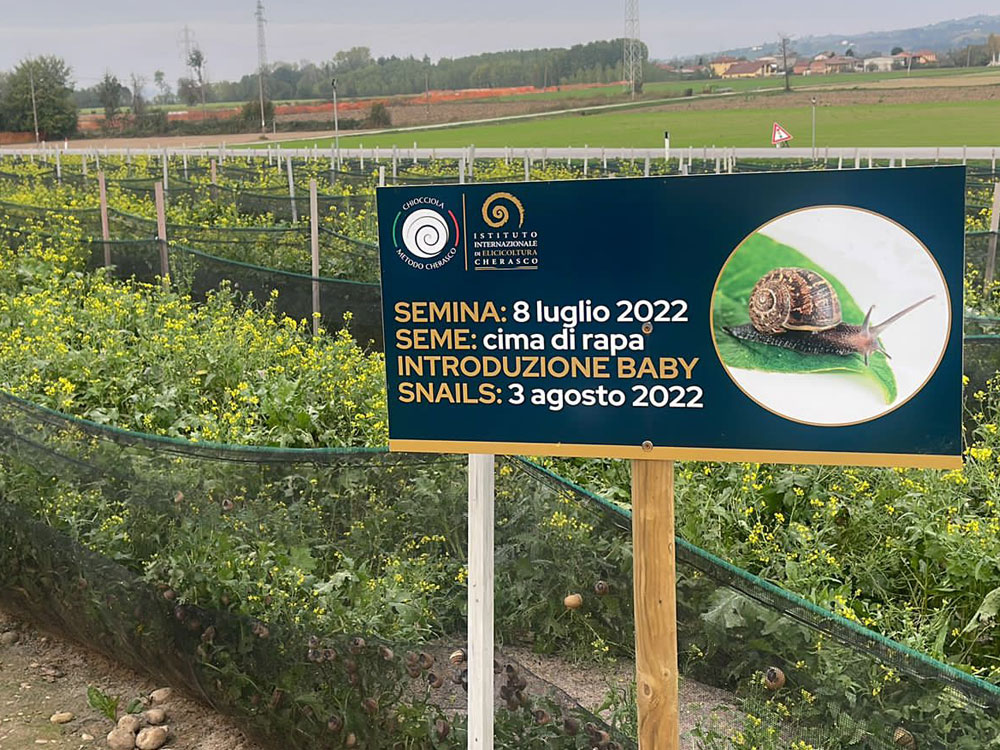
The Italian Institute of Snail Farming in Cherasco is a renowned organization dedicated to the study, promotion, and development of snail farming. Founded decades ago, the institute has played a crucial role in professionalizing and improving snail farming practices, making snail farming a sustainable and profitable venture for many farmers.
The institute offers training courses and consulting services for farmers, sharing best practices for snail farming—from the construction and management of snail farms to the harvesting and marketing of products. It conducts research to improve farming techniques and develop new sustainable solutions. This includes studies on snail habitats, nutrition, reproduction, and health. The institute works to promote snail farming in Italy and abroad by participating in trade shows, events, and conferences, and by collaborating with industry organizations and associations.
Particular attention is paid to the environmental sustainability of snail farming, promoting practices that minimizeecological impact and encouraging innovation to improve the efficiency and quality of snail farming. The company can provide certification services to ensure that products derived from snail farming meet high-quality standards. This certification can be important for producers who wish to differentiate themselves in the market.
The institute also supports farmers in marketing snails and snail-based products, facilitating access to domestic and international markets. Through these activities, the institute contributes significantly to the growth and success of snail farming, supporting farmers and ensuring that best practices are adopted for efficient and sustainable snail production.
Bibliography
- Avagnina, G. (2002). Snail Farming. Cherasco: International Institute of Snail Farming in Cherasco. BARBIERI, C. (2019). The Snail Farming Industry: Market Analysis and Case Study.
- Avagnina, G. (2002). Heliciculture. Cherasco, International Institute of Heliciculture in Cherasco.
- Carleo, P., Carleo, A., & Lai, M. B. (1954). Snail Farming.


