


Program to accelerate professional figures in the circular economy for food
Circular Recipe by circular gastronome Alessia Dinatale
Summary
- Difficulty: Easy
- Preparation: 60 min
- Serves for: 4 people
- Cost: Low
Ingredients
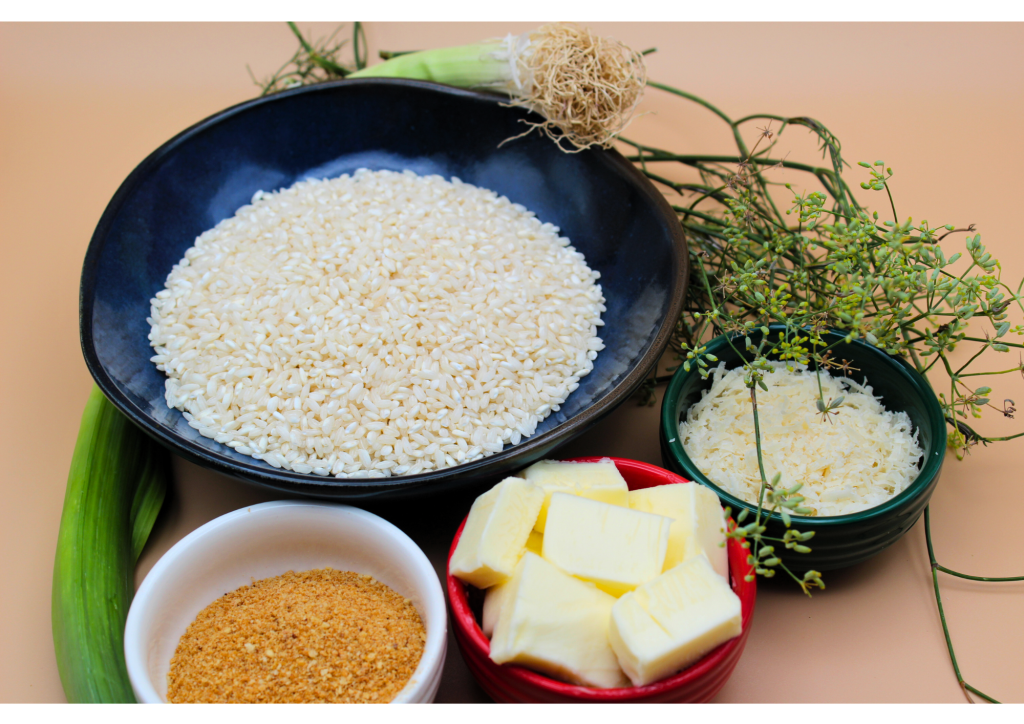
- 320 g of Carnaroli rice
- 2 spring onions
- 1 bunch of wild fennel
- 80 g of stale bread
- Salt and pepper to taste.
- Extra virgin olive oil to taste or butter and grated Parmesan cheese to taste.
Proceedings
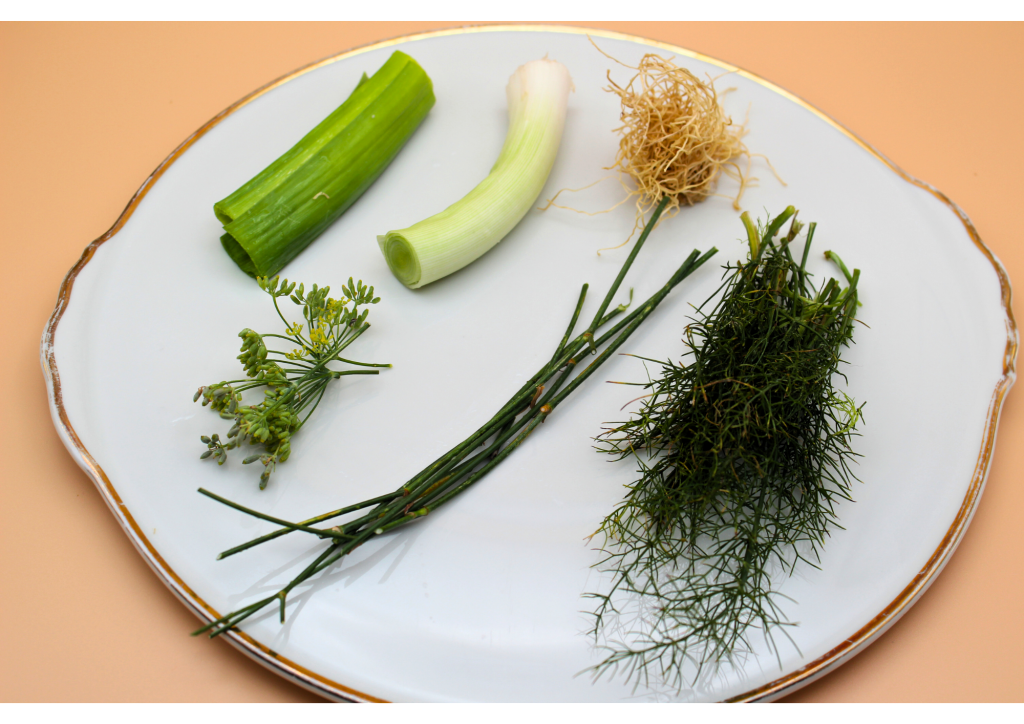
- Thoroughly clean the spring onion and fennel , separating the tougher parts (outer leaves, fibrous stems and roots) from the more tender ones. Place the leathery parts in a pot with water and bring to a boil to make a light, aromatic vegetable broth.
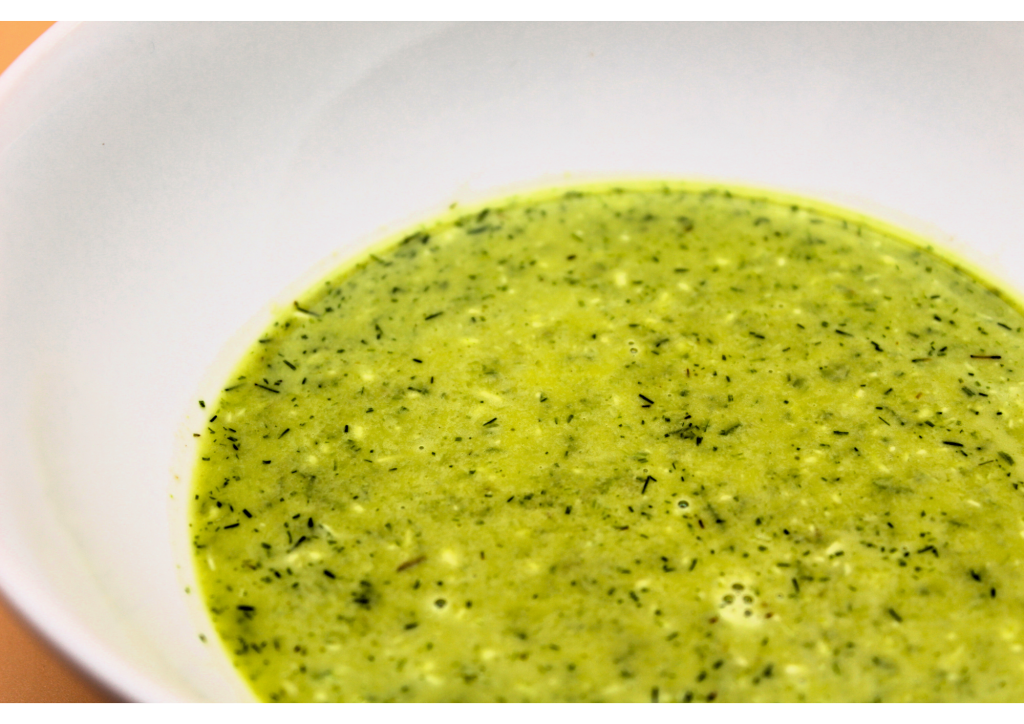
- Finely chop the softer parts of the spring onion and fennel. Heat a drizzle of oil in a skillet and let the vegetables stew gently with a ladle of broth, avoiding browning. Once soft, blend them until smooth and green.
- Meanwhile, wash the spring onion roots thoroughly and dry them. Fry them in hot oil a few moments until crispy. Do the same with the fennel flowers, if available. Keep aside.
- Prepare the muddica atturrata by crumbling stale bread and toasting it in a pan with a drizzle of oil until golden and crispy.
- Dry toast the rice in a saucepan, then begin cooking by gradually adding the stock obtained from the scraps. Halfway through cooking, add the cream of spring onion and fennel and continue adding broth until the rice is creamy and al dente.
- Turn off the heat, cream with butter or, for a vegan alternative, a drizzle of extra-virgin olive oil and let it rest for a minute. In case you use butter, also add a few tablespoons of grated Parmesan cheese.
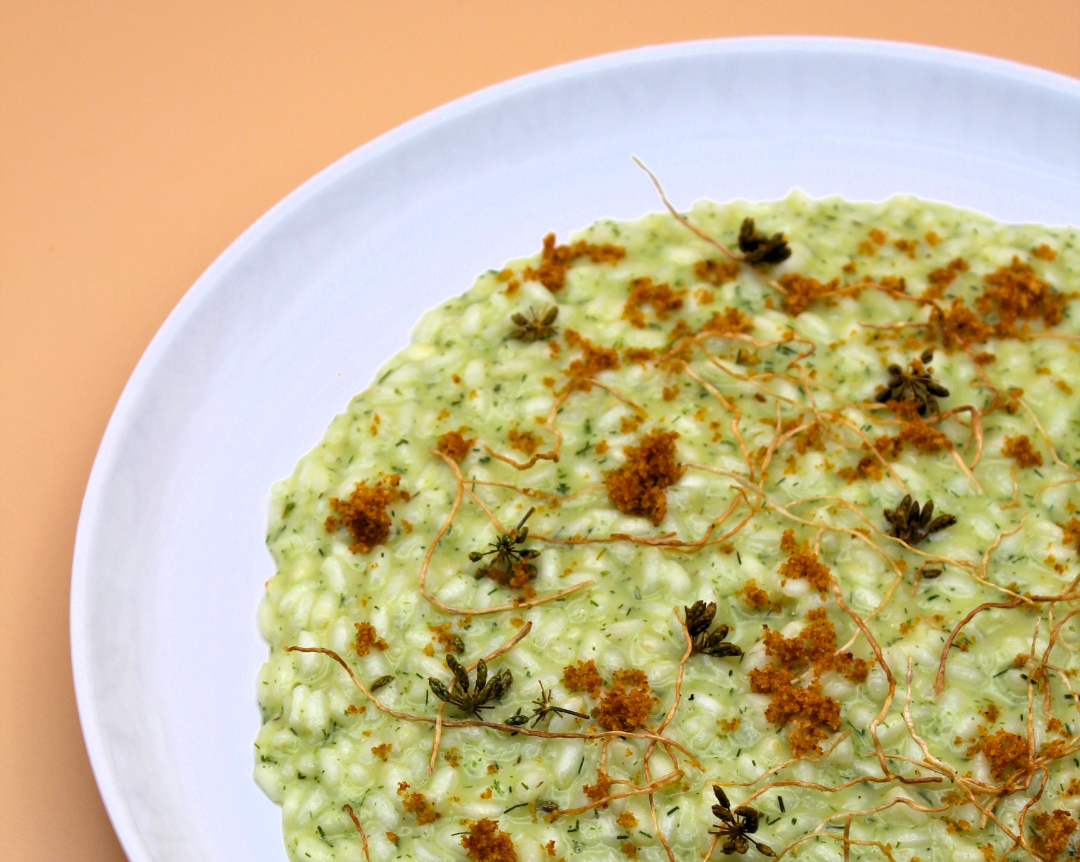
- Plate the risotto by topping with the muddica atturrata, crispy spring onion roots and, if present, fennel flowers and finish with a drizzle of oil.
Circular cooking and regeneration
This recipe clearly expresses the concept of regeneration, transforming often neglected vegetable parts into fundamental elements of the dish. The tough leaves, stems and roots of spring onion and fennel, normally excluded from consumption, are recovered and used to create an aromatic broth that becomes the basis of the preparation. Instead, the more tender parts are turned into a cream that structures the risotto, while roots and flowers find new function as crunchy and decorative elements. Stale bread, transformed into muddica atturrata, also represents a gesture of enhancement that restores flavor and texture to the dish.
The presence of wild fennel also introduces a reflection related toregenerative agriculture and the use of wild species, often considered marginal or invasive. These plants, naturally adapted to the land and able to grow without external inputs, represent a valuable resource both ecologically and nutritionally. Their use in cooking helps to reduce pressure on intensive cultivation while enhancing local biodiversity and traditional knowledge related to wild harvesting.
The recipe thus activates a circular system in which each component is regenerated and replenished, demonstrating how home cooking can turn what is marginal into a resource, without adding new inputs but working intelligently on what is already available.
Photos by Alessia Dinatale


