


By Antonella Totaro, Renewable Matter / Renewable Matter

In the face of growing evidence and consequences of climate change, the search for sustainable solutions has never been more urgent. Looking beneath our feet and returning to different soil management practices, as the EU Mission Soil itself suggests, opens up scenarios for regeneration and restoration that are crucial if we are not to overstep our planetary limits even more. Regeneration and restoration find valuable allies in carbon farming practices, especially considering the European target of achieving climate neutrality by 2050.
Carbon farming, literally “growing carbon,” represents a holistic approach to agriculture that aims to mitigate climate change by sequestering carbon in soil and vegetation. Through a range of practices, carbon farming not only aims to address greenhouse gas emissions, but also to promote environmental resilience and agricultural sustainability.
Minimum tillage
The focus of several recent European efforts, carbon farming revolves around the process of capturing and storing atmospheric carbon dioxide in natural reservoirs such as soil and biomass. By harnessing the regenerative capacity of ecosystems, the practices aim to transform conventional agricultural landscapes into dynamic carbon sinks, capable of absorbing and retaining significant amounts of carbon.
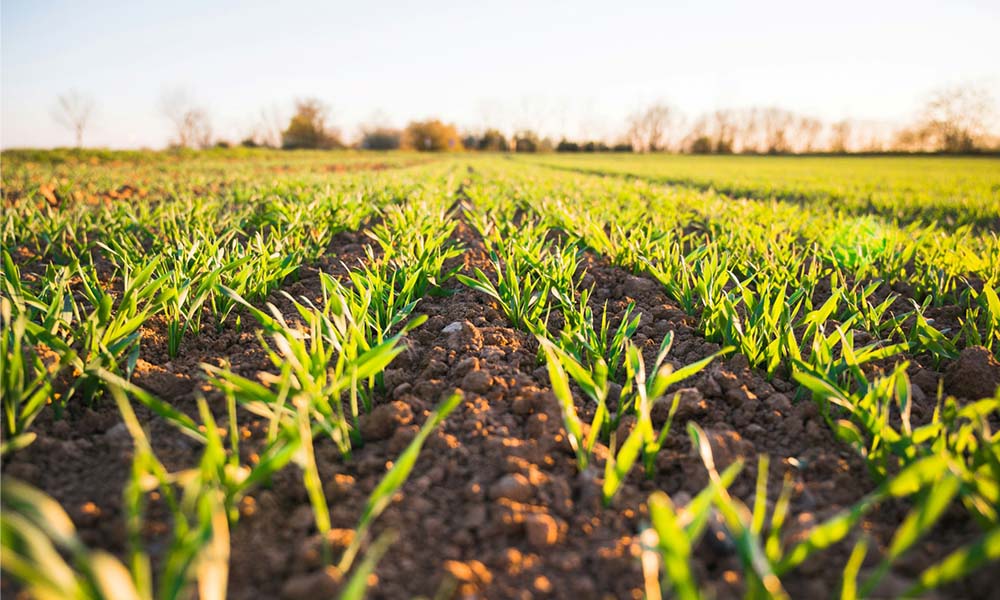
Among the practices adopted in this direction appears minimum tillage or no-tillage, that is, minimal or no tilling of the soil in order to zero disturbance to it, thus avoiding traditional tillage methods. By leaving the soil undisturbed, the stored carbon remains intact and is not released into the atmosphere. No-till farming promotes soil health by preserving soil structure, reducing erosion and improving water retention.
Cover crops, cover crops
“We now know that life forms in the top millimeter of soil live only there, just as those living in the second millimeter live only there and the same for those living in the third millimeter,” says ecologist Rodger Savory. “If you take a plow and turn over the soil, the organisms that live at the top of the soil will be at a depth of 25 centimeters, and those that were at a depth of 25 centimeters will be brought to the top. So they will die. We must at this point restart the life cycle. Through the creation of a biological, manure-based mat that protects that top millimeter of soil from ultraviolet light, the soil can gain new life.“
Protecting the topsoil is, in fact, critical. Not surprisingly, the cover crops Are another practice of carbon farming. Planting cover crops (English cover crops) during rest periods, farmers not only avoid erosion and nutrient depletion but also increase organic matter in the soil, a crucial element for carbon sequestration. Through their own decomposition, cover crops help to store organic carbon in the soil, thereby strengthening their storage capacity and promoting the long-term fertility of the soil itself.
Crop rotation and agroforestry management
Crop rotation, a time-honored agricultural practice that diversifies crop species by alternating them regularly, enables farmers to achieve healthy soils, having the additional effect of suppressing pests and diseases and additionally mitigating nutrient loss in the most valuable asset. Such rotation also facilitates the accumulation of organic matter.
Adopting agroforestry management techniques, a practice that integrates trees and shrubs into agricultural landscapes, is another possibility. By incorporating perennial tree and/or shrub species into arable or pasture land, farmers can take advantage of the carbon storage potential of trees and gain several co-benefits such as improved biodiversity and increased shade present on the land.

This is nothing new really, since already Pliny the Elder in his Naturalis Historia told of this integrated and varied system, writing, “In the shade of the proud palm tree sprouts the olive tree, and under the olive tree the fig tree, under the fig tree the pomegranate tree, and under the pomegranate tree the vine, under the vine the wheat, then the legumes, then the leaves: all this in the same year, and all these plants feed on each other’s shade.”
Biochar in agriculture
Finally, the production and incorporation of biochar into these systems can improve the fertility of soils and their water retention capacity while sequestering carbon for hundreds or thousands of years. Biochar, a product of organic plant origin, is made through a process of slow pyrolysis of organic raw materials, mainly lignocellulosic biomass, such as wood chips and wood processing waste, from the cleaning of green areas and forests. The result is a matrix product, which is extremely porous and can be applied as a soil conditioner on soils due to its properties. Biochar, in fact, retains moisture, distributes nutrients in the soil more slowly and provides a living environment for microorganisms.
Thus, there are numerous carbon sequestration techniques that not only promote overall ecosystem health, but also mitigate soil compaction and emissions associated with conventional food production systems, while increasing water infiltration and holding capacity.
The impact of carbon farming on food supply chains
Italian soil is in bad shape. This is what emerged from the report Italian soil at the time of the climate crisis published last year. Sixty to 70 percent of soils in the European Union are also unhealthy, partly due to current management practices and fertilizers applied. About 25 percent of EU soils have erosion rates above the recommended sustainable threshold, which means that the soil ecosystem will continue to degrade.
A turnaround that focuses on carbon farming would undoubtedly have a significant impact on food supply chains, not only in terms of agricultural production, but also in terms of the value chain and overall supply chain sustainability. More sustainable food production, due in part to crop diversification, would in turn lead to greater food security, reducing dependence on high-impact monocultures and helping to ensure a steady and diverse food supply.
As Heather Terry, founder and CEO of GoodSam, a U.S.-based company among those admitted to the production phase of the BigFood Redesign Challenge of the Ellen MacArthur Foundation, “GoodSam takes from farms all crops that are commercially viable, which means that many of our farmers now receive an annual income stream from us because we actively try to take everything they produce and not force them into a monoculture system. Monocultures exist because of large corporations, which have turned to farmers and said, ‘Please grow this crop, we will buy it all and in this quantity.’ Monocultures were created because of demand.”
The benefits of carbon farming and best practices
A non-secondary effect of adopting carbon farming practices would be to reduce greenhouse gas emissions associated with agriculture, including those associated with the use of chemical fertilizers, burning of agricultural residues and livestock management practices. At the same time, crop rotation and agroforestry promote agricultural biodiversity by providing habitats and resources for a variety of plant and animal species. Food supply chains that incorporate sustainable carbon farming practices can enhance the value of their products in the marketplace, responding to growing consumer demand for responsibly and sustainably created foods. Labeling and certification of such products can communicate the added value associated with sustainability, differentiating foods on the shelf and creating market opportunities for producers.
In this direction, for example, there are a number of companies that are betting on the integration and role of chestnuts, provided there is investment capital that looks to the long term. These include Agroforestry Partners, a fund that invests in agroforestry projects on farmland. “Chestnuts solve a lot of problems from a wildlife standpoint and from an economic standpoint. Chestnut trees have incredible economics, both in terms of their purchase price and their monetization,” says Brett Hundley, president of AP. “However, chestnut trees themselves do not begin to produce a commercial crop until about the seventh, eighth or ninth year of their life. So a fairly long time elapses from the time the tree is planted in the ground to the time a marketable crop is produced.”
Collaboration and co-creation along the food value chain among producers, processors, distributors, consumers, and other stakeholders can foster the sharing of best practices, partnership development, and collaborative innovation in order to create synergies and accelerate the transition to more resilient food supply chains. Carbon farming practices can transform food supply chains into more sustainable and future-oriented systems. Adopting these practices requires a collective commitment from all actors in the food value chain, but it also offers significant opportunities to create shared value and help build a healthier, fairer and cleaner food future.


