Program to accelerate professional figures in the circular economy for food
Circular Recipe by circular gastronome Alessia Dinatale
Summary
- Difficulty: Easy
- Preparation: 40-50 min
- Serves for: 600-700 g sweet-and-sour preserves
- Cost: Low
Ingredients
- 300 g pumpkin
- 1 large apple
- 1 large pear
- 1 onion
- Cinnamon qb
- Turmeric qb
- Salt qb
- Pepper qb
- Laurel and rosemary
- 100 ml apple cider vinegar
- 100 g sugar or erythritol

Proceedings
- Peel and chop squash, apple, pear and onion into small, regular cubes.
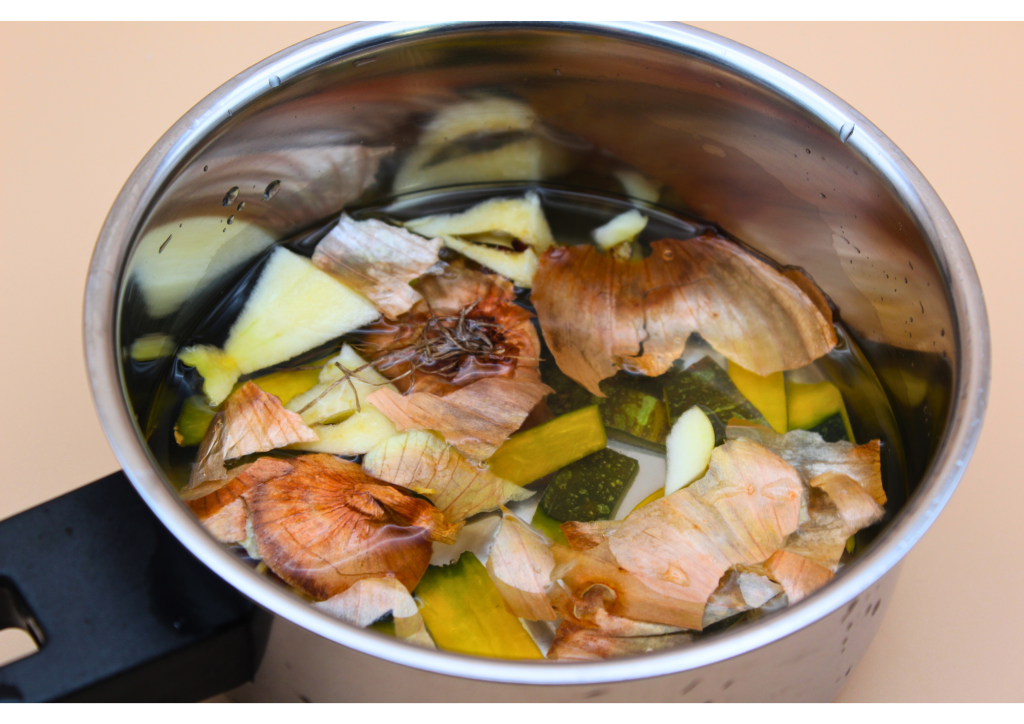
- For the broth, put peels, seeds, and scraps of fruits and vegetables in the pot and sauté with a drizzle of oil. Cover with 1 liter of water and simmer for 30 minutes. Then strain to create the flavor base of the chutney.
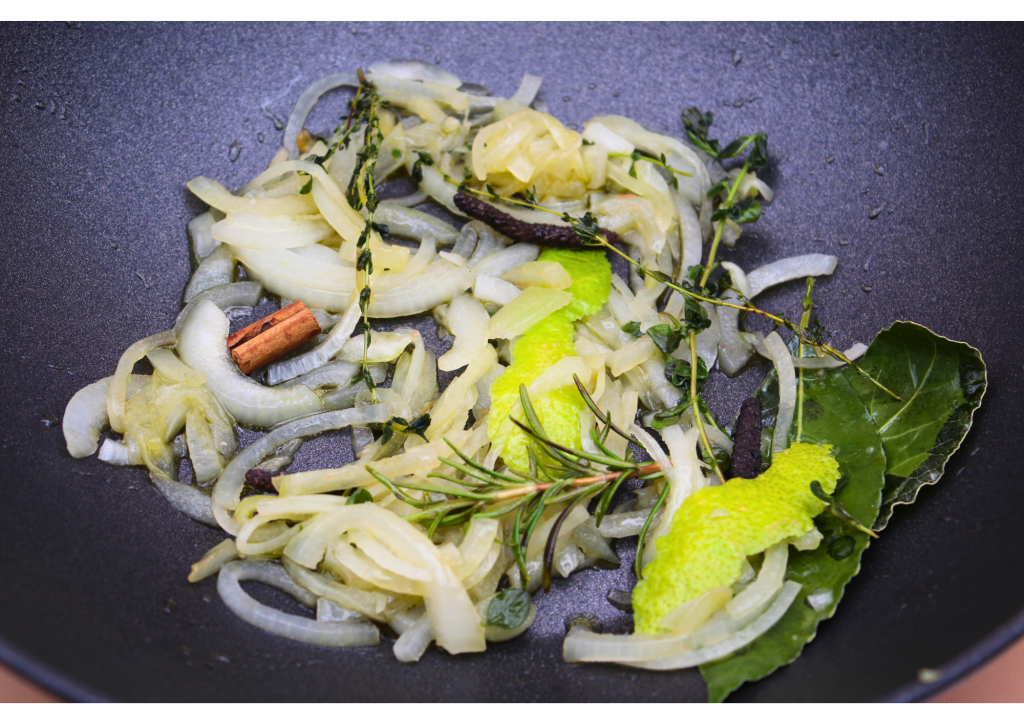
- In saucepan, melt sugar with a splash of oil and a ladle of broth until it becomes syrupy. Add onion and sauté for 2-3 minutes.
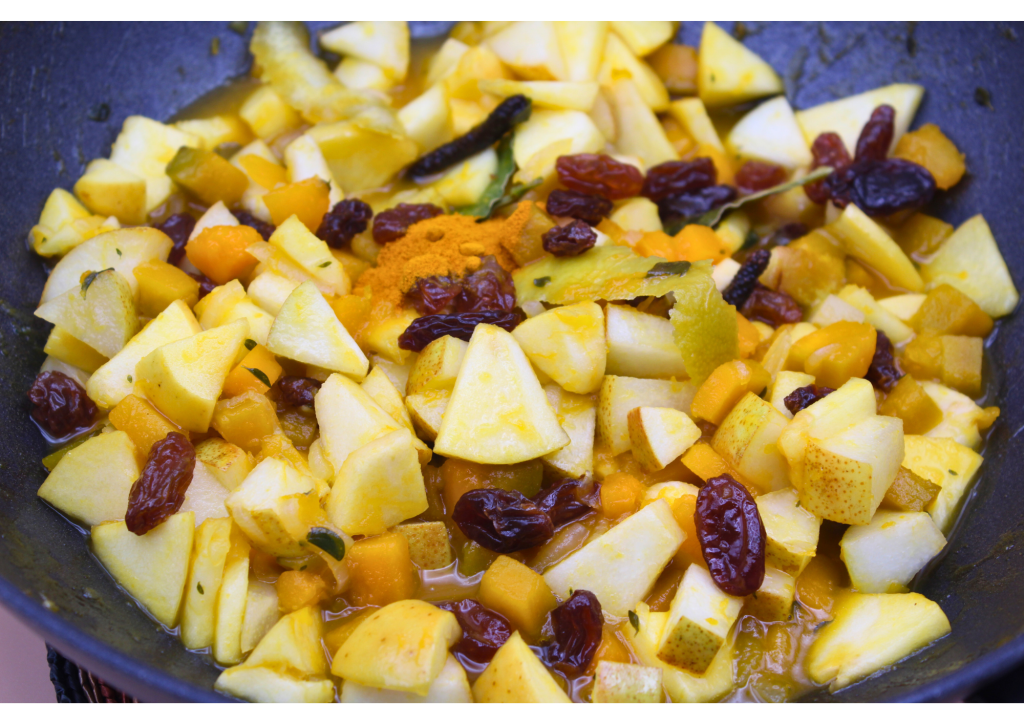
- Combine squash, apple, pear, spices, and the strained waste broth a little at a time to help the vegetables cook. Cook for 15 minutes over medium heat.
- Add vinegar over high heat, adjust salt, and continue cooking for 10-15 minutes until the consistency is soft but with chunks clearly visible.
- Allow to cool completely: the flavor stabilizes after 12-24 hours.
- You can store in the refrigerator for about a week or in well-sterilized, vacuum-sealed jars for up to 6 months.
Circular Kitchen and Shelf Life
This autumn spiced chutney represents an example of how circular cooking can effectively intervene in increasing the shelf life of fruits and vegetables, that is, their durability. Pumpkin, apple and pear are naturally perishable ingredients, destined to decay rapidly when consumed fresh; through processing into sweet and sour preserves, however, they are stabilized through the combined action of sugar, vinegar and cooking, which inhibit microbial growth and allow extended storage for up to several months.
The stock obtained from processing waste (peels and seeds) also contributes to the circular value of the recipe, transforming what would be waste into a functional aromatic resource. In this way, the preservation technique becomes not only an anti-waste strategy, but also a design gesture that expands the value of the product over time.
The warm and spicy flavor profile makes this chutney particularly suitable for the Christmas season: it is an ideal accompaniment for cheeses, vegetable roasts, holiday main courses or convivial cutting boards, bringing to the table a condiment that combines memory, seasonality and resource enhancement. A small domestic gesture that transforms preservation into an act of care and circular conviviality.
Photos by Alessia Dinatale